Why Most Revenue Cycles Underperform
The hidden structural drivers behind cash-flow breakdowns. Most revenue problems are not collections problems — they are upstream design problems.
Tune InA healthcare revenue cycle podcast for practice owners and operators who want predictable cash flow, scalable systems, and measurable growth — by reducing complexity, optimizing time, and building enterprise value through better data.
New to the podcast? Episodes 1–3 establish the core framework: why most revenue cycles underperform — not because of collections effort, but because of structural imbalances in Billing Time Demand, operational design, and Revenue Cycle Complexity.
The hidden structural drivers behind cash-flow breakdowns. Most revenue problems are not collections problems — they are upstream design problems.
Tune In
Why time — not effort — is the truest constraint on every revenue cycle, and how time-based data exposes what claim counts and AR aging cannot.
Tune In
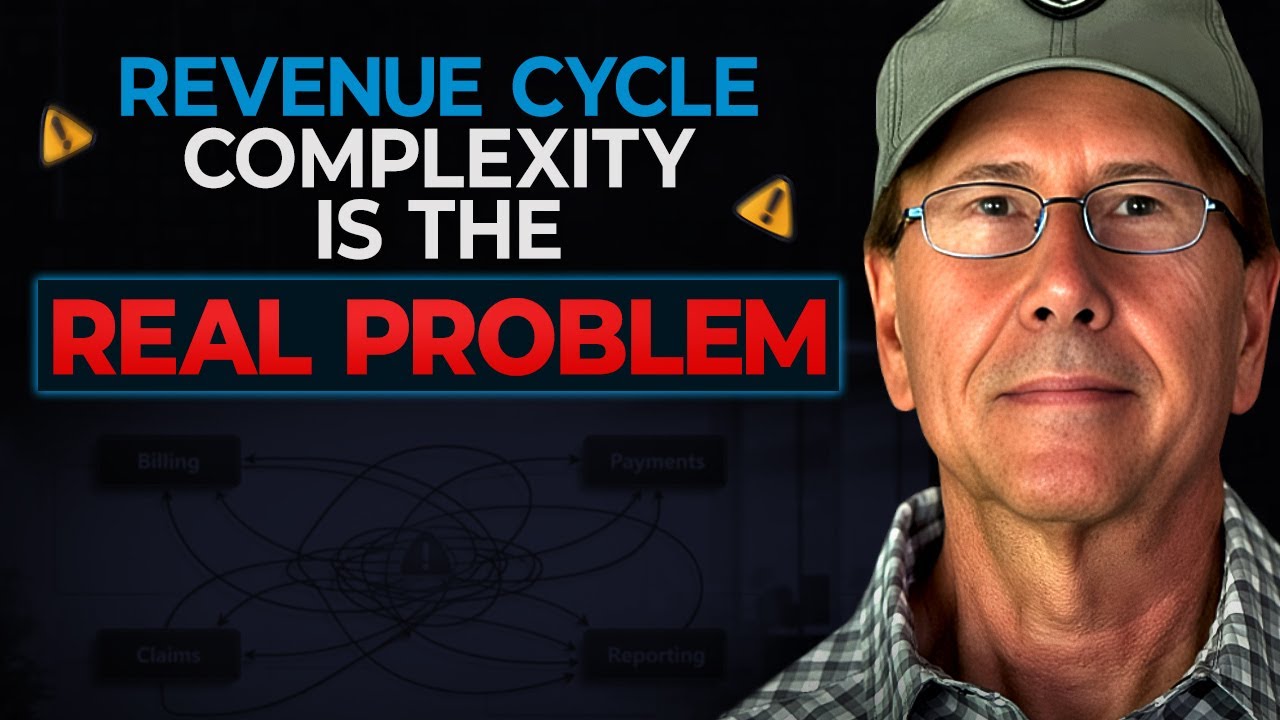
How preventable upstream friction silently inflates billing time, delays cash, and caps growth — and what it takes to make that complexity visible and actionable.
Tune InRehabbing Your Revenue Cycle is dedicated to understanding why revenue cycles break, and what it actually takes to fix them in the real world.
Each episode examines revenue cycle performance through the lens of time, systems, and root-cause analysis, moving beyond surface-level billing metrics and collections tactics. We explore how operational complexity, coding and documentation breakdowns, patient payment systems, payer behavior, technology choices, compliance risk, and internal process design quietly inflate cost, slow cash flow, and limit scalability.
Grounded in real-world experience across millions of claims and multiple care models, the podcast features conversations with practice owners, operators, billing leaders, technologists, compliance experts, and industry partners. Together, we examine what data actually matters, how revenue and marketing systems intersect, and how billing can be transformed from a back-office function into a business intelligence engine that supports stronger financial outcomes and long-term practice value.
It is designed for practice owners and executive teams responsible for cash flow, margin stability, and enterprise value. For multi-location and growth-stage organizations where scalability depends on operational alignment. And for revenue cycle leaders who want to understand not just what their metrics are, but why those metrics exist.
Most healthcare organizations measure outcomes such as days in AR, denial rates, revenue per visit, and cost to collect. Far fewer examine the structural conditions that create those outcomes.
When accounts receivable inflate, denial management consumes disproportionate time, billing costs rise, or revenue becomes inconsistent, the instinct is often to intensify effort within the billing department. In reality, revenue cycle performance is rarely constrained by effort alone. It is shaped by the design of upstream processes, the interaction between revenue cycle functions, and the balance between billing time demand and time supply.
This podcast is for leaders who want to understand what is increasing billing time demand across their organization, and how Revenue Cycle Complexity created upstream quietly erodes cash flow, efficiency, and scalability.
It is particularly relevant for practices preparing for disciplined growth, recapitalization, or long-term stability, where predictable cash flow, optimized payer mix, scalable billing systems, and measurable operational efficiency directly influence valuation.
If you believe that revenue risk is often created before a claim is submitted, that billing must function as a business intelligence engine, and that better data drives better process and stronger outcomes, then you are the audience.
This is not tactical billing training. It is root-cause revenue cycle intelligence.

The podcast uses a specific vocabulary to describe how revenue cycles actually work. These are the foundational terms that show up across every episode.
The framework is shaped by real-world collaboration across millions of claims and diverse healthcare practice structures.
Outsourced revenue cycle management, informed by real-world data.
An outsourced revenue cycle partner focused on reducing AR time, eliminating revenue risk, and aligning billing with business outcomes — built by operators who have owned and scaled practices themselves.
Meet the PartnersTurning billing work into revenue cycle intelligence.
Creator of Practice Data Solutions, a billing intelligence platform that quantifies Revenue Cycle Complexity and measures Billing Time Demand across healthcare organizations and RCM firms.
Meet the PartnersHealthcare practice owners, executives, and RCM leaders responsible for cash flow, margin stability, and enterprise value. Especially relevant for multi-location and growth-stage organizations, and for revenue cycle leaders who want to understand why their metrics exist, not just what they are.
New episodes drop on a rolling cadence as conversations are recorded. Subscribe on Apple Podcasts, Spotify, or YouTube to be notified when each episode goes live.
No. The framework is built for practice owners and executives. Each episode opens with definitions and the foundational episodes (1–3) establish the vocabulary used across the series.
Yes. Use the form on the Subscribe page to suggest a topic or pitch yourself as a guest. We respond to every relevant inquiry.
The podcast is independently produced. Its perspective is informed by work done at Revenue Cycle Solutions LLC and Ascend Solutions LLC. Both companies appear on the Partners page. Episodes are educational first.
Subscribe on your platform of choice — or get episode notes by email.